Flat roof repair in Decatur, AL: common problems, costs & when to replace
Flat roofs don't fail the way pitched roofs do. By the time you see a ceiling stain, the leak usually started somewhere else entirely. Here's how to diagnose a flat-roof leak in Decatur — and what each fix costs.

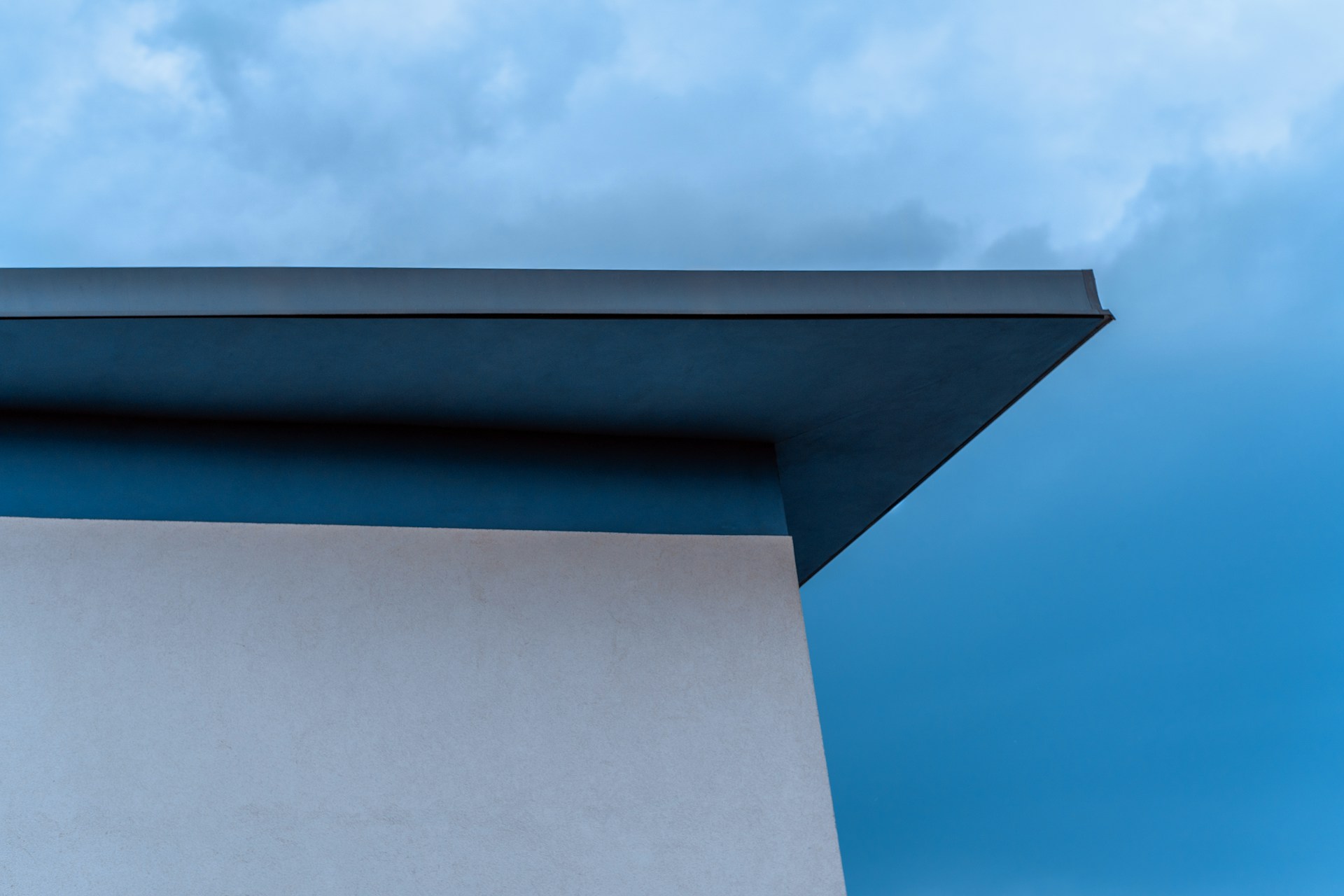
Flat roofs are sneaky. A pitched-shingle roof will tell on itself — you can spot missing shingles from the driveway, you see granules in the gutter, the curb appeal goes downhill in a hurry. A flat roof, on the other hand, will sit up there looking perfectly fine right up until the day there's a brown ring on your ceiling in the back bedroom. By the time you know something's wrong, water has been finding its way under that membrane for months.
I'm Quinton, and we do a fair amount of flat roof repair in Decatur, AL — mostly on additions, detached garages, mid-century homes, and small commercial buildings. Folks ask me all the time why their flat roof started leaking out of nowhere, and the honest answer is "it didn't start out of nowhere, you just couldn't see it." Let me walk you through what we typically find and what it costs to fix.
Quick note before we dig in: "flat" roofs aren't really flat. Code says they need at least a quarter-inch-per-foot slope so water can drain. When that slope is right and the membrane is in good shape, a properly-installed flat roof in North Alabama can give you 20 to 25 years easy. When that slope is off, or the membrane gets compromised, the failure shows up in predictable ways. Here they are.
The five things that go wrong on Decatur flat roofs
1. Standing water (we call it "ponding")
Most common issue I see, hands down. Especially on commercial buildings around town and on mid-century homes. Water that's still sitting up there 48 hours after the rain stopped is "ponding," and it's bad news for a few reasons:
- It chews through the membrane two to four times faster than normal weathering
- Water is heavy — one inch sitting across a 20-by-20 area is over 2,000 pounds of dead load
- It freezes and expands in winter and cracks the membrane
- It usually means something else is wrong — drains blocked, decking sagging, or the slope was never enough to begin with
The fix depends on the cause. Blocked or undersized drains — $200 to $600 to clear or upsize. Real slope problems with deflected decking — that needs tapered insulation work, which on a small section runs $1,500 to $4,000.
2. Punctures and seam separation
Flat roofs are membrane systems — TPO, EPDM rubber, or modified bitumen on most Decatur buildings put up since the '80s. Older built-up roofs (the "tar and gravel" kind) fail at seams as they age. Here's what we patch on the regular:
- HVAC tech foot traffic damage (the AC guys aren't trying to mess up your roof, but it happens)
- Dropped tools that poked a hole through
- UV-cooked seams where the adhesive let go
- Modified bitumen seams where the original install heat-welding was incomplete
A clean membrane patch is one of the cheapest fixes in roofing — usually $300 to $700 depending on access and getting the material to match. We had a fella in southwest Decatur whose roof had been leaking for three months. Turned out it was a single half-inch puncture from an HVAC tech's dropped tool. $450 fixed it, and the ceiling damage repair was more than the roof.
3. Flashing failures
Anywhere something sticks up through the roof is a leak waiting to happen if the flashing isn't right. HVAC curbs, plumbing vents, gas lines, satellite mounts, parapet walls — all of these need watertight flashing, and all of them need an eyeball on them every spring and fall. The flashing failures we see most often:
- HVAC curbs where the metal counter-flashing has lifted
- Skylights with degraded butyl tape
- Drain inserts that have separated from the membrane around them
- Parapet wall caps that got loose or rusted
Flashing repair runs $400 to $1,200 per penetration depending on whether we have to cut the membrane back and re-weld it.
4. Blisters and "alligator skin"
Blisters in a flat roof are little pockets of trapped air or moisture under the membrane. Small isolated blisters — leave 'em alone, they're cosmetic. Big blisters (more than a foot across) and clusters of blisters — those are problems. They mean moisture got under your membrane somehow, and eventually one of them breaks and you've got a leak.
"Alligatoring" is when the surface of an aging modified bitumen or built-up roof looks like cracked alligator skin. It means UV has cooked the surface coating. A roof coating system (silicone or acrylic) can restore the surface and buy you another 5 to 10 years — usually $2.50 to $4.00 per square foot. That's a good middle option if your roof is structurally sound but the surface is shot.
5. Clogged drains and scuppers
Internal drains clog with leaves and debris. Scuppers — the slots in parapet walls that let water drain off the edge — get blocked the same way. Both of those cause ponding, both of them back water up under the membrane, and both are 100% preventable with a $150 to $400 drain clean-out twice a year. The cheapest roofing decision you can make is the one where you call a roofer for a maintenance check before there's a leak.
So… repair or replace?
Look, a flat roof replacement is a bigger deal than a shingle replacement. Membrane, insulation, sometimes the decking — there's more going on. So I lean toward repair when it's a real option. Three questions decide it:
How old is the membrane?
- Under 12 years → repair almost always makes sense
- 12 to 18 years → depends on the damage. A few isolated issues, we repair. Damage in lots of places, we start talking about replacement or a coating system
- Over 18 years → lean toward replacing it. Patching an end-of-life roof is throwing money at a leak that's just going to pop up somewhere else next month
How widespread is the damage? Two or three isolated spots → repair. Damage across the whole roof → either a full replacement or a coating restoration.
Is there structural concern? Soft decking, sagging, visible deflection — that's not a membrane problem, that's a structure problem. Replace, and probably address what's underneath while we're at it.
What a flat roof replacement costs in Decatur
For homes and small commercial in Decatur:
- TPO single-ply (most common new flat roof) — roughly $8 to $12 per square foot installed, depending on insulation and access
- EPDM rubber — roughly $7 to $10 per square foot installed
- Modified bitumen — roughly $6 to $9 per square foot installed
- Roof coating restoration (only an option if the existing roof is structurally sound but the surface is shot) — roughly $2.50 to $4.00 per square foot
A typical 1,000-square-foot flat roof on a Decatur addition or detached garage runs between $7,000 and $12,000 for a full TPO replacement.
What to do if you've got a leak right now
- Don't go up there yourself. Flat roofs are deceptively dangerous — wet membranes are slick as ice, you can't see the edges, and skylights have been known to fail under a foot. I've heard too many stories. Let us climb it.
- Photograph the interior damage. Ceiling stains, water marks on walls, anything visible. The adjuster's gonna want to see it if you're filing a claim, and we'll want to see it to track the leak.
- Get a roofer up there fast. Flat roof leaks almost never start where the ceiling stain shows up. Water travels along the bottom of the deck and shows up wherever it can — which is usually nowhere near the actual source. A roofer who knows what to look for will find the real leak in 20 minutes.
- Call me at (256) 227-6998. Free inspection, free quote, no pressure. We cover Decatur and the surrounding area for both residential and small commercial flat roof work.
Why a Decatur roofer matters on a flat roof
Flat roof repair is more diagnostic than shingle repair. The visible leak is rarely the actual leak. A roofer who knows local construction patterns — how the 1970s and '80s additions around here are built, how the HVAC curbs were typically detailed, the way water moves on these particular roofs — will find the source faster than someone who's pattern-matching from a different state.
We've been working flat roofs in Decatur and the Tennessee Valley since I started Yarco in 2021. Alabama Roofer License #31575. Five-year labor warranty on every repair and every replacement. Free inspection, written quote, no high-pressure sales.
Flat roof questions I hear a lot
"How do I know if I have a flat roof or a low-slope roof?" If the pitch is under 2/12 (rises less than 2 inches per foot of horizontal run), the industry calls it "low-slope" and it gets installed with membrane systems, not shingles. From your perspective as a homeowner, anything that "looks flat" is in the same category.
"Can I put shingles on a flat roof?" No. Shingles need gravity to shed water. Manufacturers usually require at least a 4/12 pitch. On a flat or low-slope roof, shingles will leak immediately — I don't care what the salesman tells you.
"How often should a flat roof be inspected?" Twice a year, plus after any big storm. Spring and fall is the standard. Most of the flat roof failures I see could have been caught for free in a 30-minute visual inspection.
"My flat roof is tar and gravel. Is that bad?" Built-up roofs (the technical name for tar and gravel) are an older system that works great when they're maintained — but they eventually fail at the seams and laps. If yours is over 20 years old, you're on borrowed time. A roof coating can buy you a few years. Eventually it'll need to be replaced with a single-ply membrane system like TPO or EPDM.
"Do flat roofs really last as long as pitched roofs?" A well-installed modern TPO or EPDM in Decatur should give you 20 to 25 years, which is right in line with a typical asphalt shingle roof. The big difference is that flat roofs are way more sensitive to install quality than pitched roofs. A bad TPO install can leak in year three. That's why you want a local roofer with a real warranty doing the work — not the cheapest crew you can find.
Got standing water, a ceiling stain, or just want a real assessment of where your flat roof stands? Call me at (256) 227-6998 or schedule a free inspection online. Free inspection, written quote, no pressure — and I'll tell you straight if it's a repair or a replacement.