Roof leak repair in North Alabama: how to find the source (and what it costs)
Most leaks I find are nowhere near the ceiling stain. Here's how we actually trace a roof leak in North Alabama, what each fix costs, and when a leak means it's time to replace the roof — not patch it.

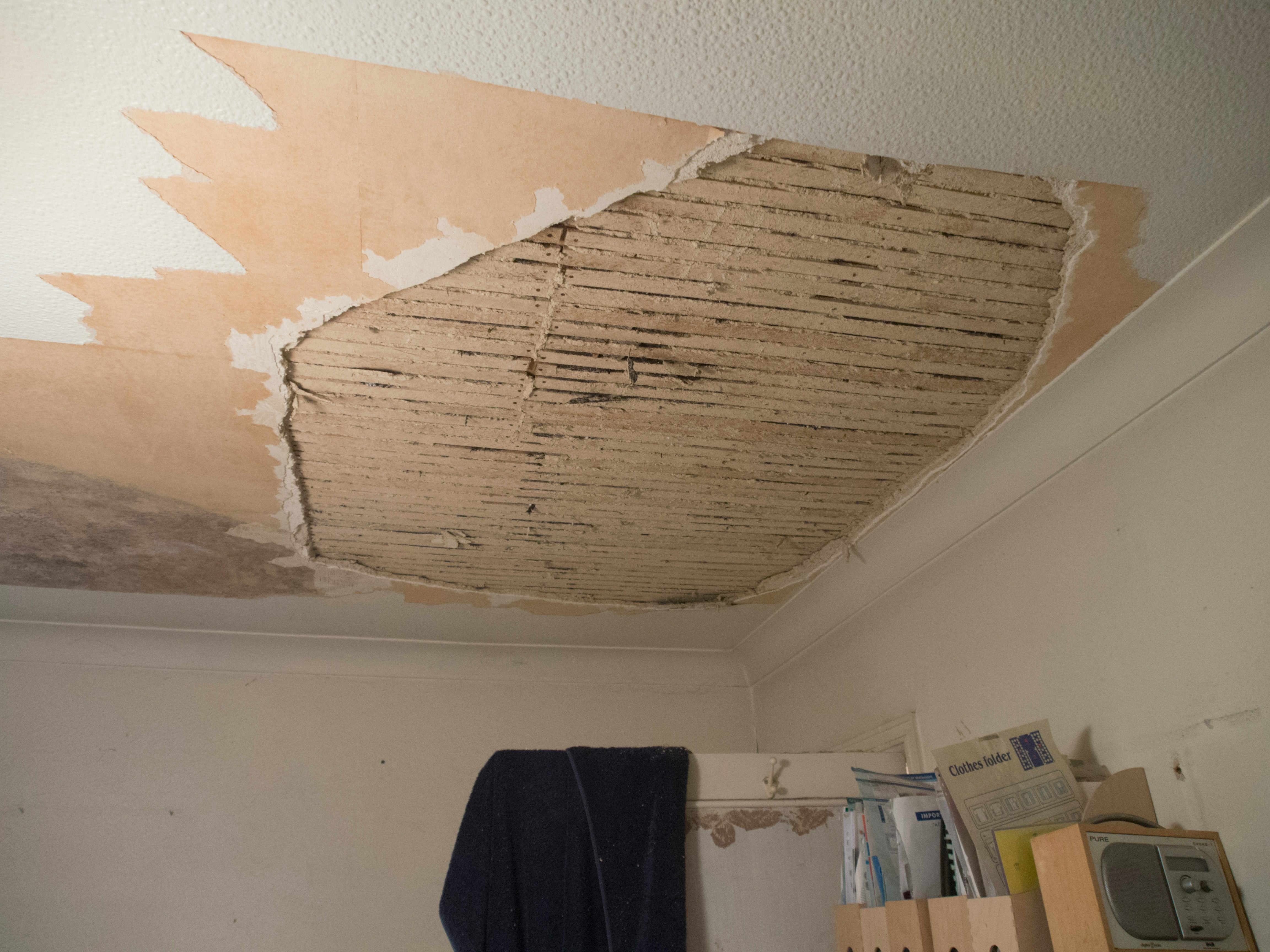
Had a fella call me out to a house in Decatur a few weeks back. Said he had a leak in his living room ceiling — water spot the size of a dinner plate, right above his couch. He'd already had two other roofers out. One told him he needed a whole new roof. The other slathered roof tar on the spot directly above the stain in his ceiling and called it good. It leaked again the next storm.
When I got up there, I'll tell y'all what I found: the actual leak was almost twelve feet uphill from the ceiling stain, around a vent pipe whose rubber boot had cracked clean through. Water was running down the back side of the decking, traveling along a rafter, and dripping where it pleased. Sixty-dollar boot, twenty minutes of work. He'd been quoted thirteen thousand dollars for a new roof.
I'm Quinton, and my crew at Yarco has been doing roof leak repair across North Alabama since 2021. If you've got a leak right now, here's the honest truth about how to find it, what it costs, and how to keep some other fella from selling you a roof you don't need.
The leak in your ceiling is almost never where the leak in your roof is
This is the single most important thing to know about a roof leak: water doesn't fall straight down. It runs along the underside of the decking, follows nails, slides down rafters, and drips out wherever there's a low spot or a seam. By the time you see a stain on your ceiling, the actual hole in your roof can be anywhere from a few inches to twenty feet away from that stain.
That's why the "just put some tar on it" approach almost never works. You can patch the spot you can see all day long, and the water is still gonna come in from somewhere else.
Finding a leak is detective work. We start from the ceiling stain, go up into the attic with a bright light, and trace the wet trail backwards — looking for water staining on the decking, rust around nails, dark patches on insulation. That gives us a rough zone. Then we get on the roof and check that zone for the usual suspects.
Where leaks actually start on North Alabama roofs
I've been on enough leaky roofs from Athens to Cullman to tell you that probably 95% of leaks come from one of these spots. The shingles themselves? Almost never. Asphalt shingles are tougher than people give 'em credit for. What fails is the stuff around the shingles.
Cracked or dry-rotted pipe boots
This is far and away the number one leak source I find. Pipe boots are those rubber collars around the plumbing vents that stick up out of your roof. The rubber has about a ten-year lifespan in our Alabama sun — UV just bakes the life out of it. Once it cracks, water pours straight down the vent pipe into your house. A standard pipe boot replacement runs $150–$275 for one, and if you've got several up there with cracks, we'll do 'em all in one trip. If your roof is more than ten years old, the boots are almost certainly your problem.
Flashing around chimneys and skylights
Flashing is the metal that bridges the gap between your shingles and something sticking out of the roof — a chimney, a skylight, a sidewall. It's also the second biggest leak source we find. The sealant up there dries out, the metal pulls loose in high wind, and water finds the gap. Chimney flashing in particular gets neglected on older homes. A reflash with new step flashing and counter-flashing runs $400–$900 depending on the size of the chimney.
Valley failures
The valleys are where two roof slopes meet — they carry a heck of a lot of water during a hard rain. If a roof was installed with a "closed valley" (shingles woven across) and the shingles in the valley are wearing thin, you'll get leaks running right down into the house. We fix those with new ice-and-water shield underneath and an open metal valley on top. Valley repair on a single line runs $350–$700.
Nail pops and exposed fasteners
Sometimes a nail backs out of the decking — old wood shrinks, the nail rises up, and now there's a hole in your roof with a little metal cap sitting in it that lets water past during a hard sideways rain. Same goes for any exposed fastener (ridge vent screws, satellite dish bolts, old antenna mounts). These get sealed with high-quality urethane sealant or, if the spot is bad enough, we'll cut in a fresh shingle. Quick fix — usually $200–$400 if we're already up there.
Damaged or missing shingles
This is the one most homeowners assume is the culprit — and sometimes it is. Storm damage roof repair is its own animal (I wrote a whole guide on that here), but for normal everyday missing or cracked shingles, we tear out the bad ones, slip new matching shingles in with proper underlayment, and seal it down right. $250–$600 for most patch jobs.
Ridge cap failure
The ridge is the very top peak of the roof, capped with shorter shingles that bend over the seam. In our part of Alabama, the wind tends to come straight at the ridge during summer storms and the cap shingles take the brunt of it. When those start tearing or lifting, water gets right under and into the house. Re-capping a ridge line runs $300–$800 depending on how much of it needs redoing.
Ice-and-water shield gaps in valleys and eaves
Most older roofs in North Alabama (anything from before about 2010) were installed with just felt paper under the shingles, no peel-and-stick membrane in the valleys or along the eaves. That works fine until a storm drives water uphill under the shingles — which happens more often than people think with our Tennessee Valley winds. New installs all get ice-and-water shield, but if your existing roof doesn't have it, that's a vulnerability we have to engineer around.
How my crew actually finds a leak
Here's the process I walk every leak call through. Takes about an hour usually, sometimes two if it's a stubborn one.
1. Look from inside first. I climb into the attic with a strong flashlight and trace the water trail. Wet insulation, dark streaks on rafters, rust spots on nail tips poking through the decking — all of it tells the story. Sometimes I can stand in your attic during a rainstorm and watch exactly where the water's coming in. That's the easiest case.
2. Mark the spot from inside, then go check it from above. I'll drive a finishing nail up through the decking at the wet spot so I can find that exact location from the roof side. Then up on the roof, I work outward from the marked spot, checking every penetration, seam, and flashing detail within about a 15-foot radius — because remember, water travels.
3. If we can't find it dry, we water-test it. This is the move most roofers skip and it's why so many leaks get misdiagnosed. We run a garden hose on the suspect area while somebody watches the attic from inside. We work uphill from the bottom of the roof, soaking one zone at a time, for several minutes each, until water shows up below. That tells us exactly where the leak is, every time. No guessing.
4. Fix it right and document it. We don't just patch — we use the right materials for the failure (new boot, new flashing, new shingles, new sealant), and I take before-and-after photos so you've got a record. Every repair we do comes with a 5-year labor warranty, same as our replacements.
What a roof leak repair actually costs
A lot of roofers won't put a price on their site. I will. Here's the real range for North Alabama in 2026, based on what we charge — not made-up averages from somewhere else.
| Repair type | Typical cost | |---|---| | Pipe boot replacement (one) | $150 – $275 | | Pipe boot replacement (three or four at once) | $350 – $600 | | Chimney reflash | $400 – $900 | | Skylight reflash or seal | $300 – $650 | | Valley repair (single line) | $350 – $700 | | Nail pop / fastener sealing (multiple spots) | $200 – $400 | | Missing or damaged shingle patch | $250 – $600 | | Ridge cap re-do | $300 – $800 | | Diagnostic visit (no repair needed) | Free |
Most single-leak callouts I do end up between $250 and $650, all-in. If a roofer is telling you a single leak needs a $10,000+ replacement, ask 'em to show you why — in photos, on the decking. There may be a real reason, but you deserve to see it before you write the check.
When a leak actually means you need a new roof
I'll be straight with you. Sometimes a leak isn't just a leak — it's a symptom that the roof has reached the end. Here's when I'll tell you to replace instead of repair:
- Decking is rotted or spongy under the leak. Once the plywood's gone, patching the shingles above it is just a stall.
- The roof has multiple active leaks in different spots — three, four, five separate failures at the same time usually means the whole system is breaking down.
- It's a two-layer roof (somebody nailed a new roof on top of the old one). Alabama code won't let us put a third layer up there, and patching a two-layer roof is rarely worth the money.
- The roof is 22+ years old in our climate. Asphalt shingles in the Tennessee Valley don't usually have a third decade in them, and pouring money into patches on an old roof is throwing good after bad. We wrote up what to actually expect for roof lifespan in Huntsville if you want the full breakdown.
- You've already paid for two or three repairs in the last couple years on the same roof. That's the roof telling you something.
If your leak fits one of those categories, our roof replacement cost guide lays out exactly what you'd be looking at in 2026.
What to do right now if your roof is leaking
If it's raining and water is coming in, in this order:
- Put a bucket under the drip and a towel on the carpet. Don't try to climb up there in the rain — wet shingles are slick as ice and people get hurt that way every year.
- Pop a small hole in the ceiling at the lowest point of the water bulge if your ceiling is sagging or holding water. I know that sounds crazy, but a controlled drip into a bucket is better than the whole ceiling coming down on your couch.
- Take photos of everything — the dripping, the ceiling, the wet floor, any debris on the roof you can see from the ground. If this turns into an insurance claim later, you'll want it documented from the start.
- Call us. (256) 227-6998. If it's an active emergency, I'll get a tarp and dry-in on your roof same-day to stop the water until the weather clears for a proper repair. Emergency tarping in North Alabama usually runs $300–$600 and your homeowners' policy often reimburses it as mitigation.
Questions I get every week about roof leaks
My ceiling has a stain but I don't see water dripping. Is it serious?
It's serious enough to look at. A dry stain means water came in at some point — and a leak doesn't fix itself. Even small leaks rot decking and grow mold inside walls if left alone. Free inspection, no obligation. I'd rather come look and tell you it's an old stain than have you call me in two years when half the decking needs replacing.
Can I just put roof tar or sealant on the leak myself?
Honestly, no — and I say that as somebody who'd happily not charge you for the work. Tar from the hardware store traps moisture under the shingles, voids most manufacturer warranties, and almost always covers the wrong spot anyway (remember: the leak isn't where you think it is). Worst case, you've made the real repair harder to do later because now we've gotta scrape your sealant off before we can fix the actual failure point.
How long does a leak repair take?
Most single-leak repairs take my crew between one and three hours, start to finish. Diagnostic plus repair on the same trip in most cases. The exceptions are leaks I can't find dry — those sometimes need a return visit with a water test if the rain isn't cooperating.
Will my insurance cover the leak repair?
Depends on the cause. Homeowners' insurance covers sudden, accidental damage — a tree limb punctured your roof, a hailstorm cracked a vent boot, wind tore off shingles. It does not cover gradual wear or maintenance issues like a 15-year-old pipe boot that just got old and cracked. If you're not sure which yours is, I'll tell you straight after I look. If it's claimable, I'll help you file the claim properly.
Do you charge for the inspection?
Nope. Free inspection, free written estimate. Always. I'd rather drive out, find nothing, and have you remember us next time than nickel-and-dime homeowners for a half-hour look.
Do you do leak repair in [Madison / Athens / Hartselle / Huntsville / Cullman / Decatur]?
Yes — we cover the whole Tennessee Valley. We're based in Decatur and run jobs out to Madison, Athens, Huntsville, Hartselle, Cullman, and the smaller towns in between (Moulton, Hartselle, Harvest, Limestone, Hazel Green — call and ask). Service area's about a 45-minute radius of Decatur.
What's the difference between a roof leak and storm damage?
A regular roof leak is usually a maintenance issue — a worn-out boot, dried-up sealant, age-related flashing failure. Storm damage is sudden damage from a specific weather event — hail, high wind, tornado, falling tree. The fix is often similar, but insurance treats 'em totally differently. If you think your leak started with a recent storm, treat it as a storm damage claim — insurance will cover a lot more.
If you've got water coming in or a stain that wasn't there last month, don't wait on it. Roof leaks get worse — never better — and a $300 repair today is a $3,000 decking job in eighteen months. Give me a call at (256) 227-6998 or schedule a free inspection online, and I'll come tell you straight what's going on up there. Free of charge, no pressure, no upsell. That's how we do it at Yarco.
— Quinton